Cemetery Etiquette: How to Be Respectful when Touring a Cemetery

August 15th, 2013
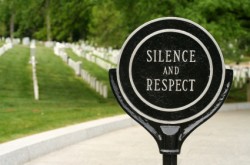
Cemetery Etiquette: How to be Respectful when Touring a CemeteryVisiting a cemetery is something that almost everyone does at some point in their life. Whether it’s a trip to a local cemetery to say goodbye to a loved one, a stop at a famous cemetery as part of a grief tour, or simply because you want to enjoy the quaint setting and serenity to be found in a cemetery, there are plenty of reasons to stop by. And while most cemeteries have regular visiting hours and encourage people to come in, it’s important to remember that these facilities are considered safe, sacred spaces for those who are mourning. In addition to following each cemetery’s individual guidelines, it’s also a good idea to follow a few general cemetery etiquette suggestions.
  • Don’t visit at night without permission. Most cemeteries have set hours of operation, which are listed on their gates or at the main facilities. Those without set hours are typically open from dawn until dusk, and don’t encourage nighttime visitors. If you do want to visit after hours, be sure and contact someone in charge to get permission first.
  • Don’t sit on, lean on, or make rubbings of the erected memorials. Headstones, vaults, crypts, and memorial benches are meant to stand for hundreds years. (And in historic cemeteries, many of them already have!) Do your best not to interact with the stone materials, especially if you don’t have permission first. Many cemeteries forbid headstone rubbings because of the additional wear and tear they cause. (more…)

Grief Tourism

August 12th, 2013
Grief TourismMost of us are already aware of the appeal of walking through an old cemetery. Rich with history and age, beautiful in terms of scenery, and filled with a sense of serenity that’s hard to capture in our modern world, older cemeteries have a park-like atmosphere that appeals to many different types of people. This recent resurgence of interest in visiting cemeteries has led to a phenomenon known as grief tourism. Much less depressing than it actually sounds, grief tourism (also known as dark tourism) is considered any vacation or trip in which visiting cemeteries is the primary objective. Where Grief Tourism Takes Place The Pere-Lachaise Cemetery in Paris, which first opened in 1804, receives more than a million and a half visitors a year. (Many of them come to see the grave of Jim Morrison, although there are plenty other celebrities here to catch the eye.) Other popular Paris destinations include Montparnasse Cemetery and Saint-Denis, where many of France’s monarchs have been laid to rest. (more…)

Funeral Trends: Ghanaian Fantasy Coffins

August 9th, 2013
Funeral Trends: Ghanian Fantasy CoffinsA recent trend in the funeral planning industry is to bypass traditional caskets in hardwood and stainless steel to opt for something more personalized. From custom-made themed caskets and do-it-yourself casket kits to simple shrouds that make the most out of a green funeral, it seems like consumers today have more options than ever before. And while it might seem like these additional options are strictly an American phenomenon, the truth is actually quite the reverse. In a recent magazine article at Don’t Panic, one journalist shows that in terms of quirky coffins, Ghana has got almost the entire world beat. Ghanaian Fantasy Coffins In Ghana, West Africa, one tribe has taken burial to the next level with fantasy coffins. So named because they are colorful, whimsical, and definitely crafted from the world of fantasy, these caskets are similar to traditional ones in terms of the materials and craftsmanship. Hardwoods are used for the exterior, and the insides are lined with satin and other plush options. It’s the design that really makes the difference. (more…)

Is a Discount Funeral Home a Good Idea?

August 6th, 2013
Is a Discount Funeral Home a Good Idea?In an age when everyone is trying to cut back on their expenditures, it might seem like a good idea to reduce funeral costs by choosing a discount funeral home. Traditional funerals can be quite expensive—particularly if no advance funeral arrangements were made—and the stress associated with paying for a burial among the rest of the emotional toll death takes can rapidly push a family over the edge. Discount funeral homes exist to provide a lower-cost alternative to families who want to save money on planning a funeral. They exist in large part because funeral homes have become so corporatized in the past few decades. Discount funeral homes found a niche market among these corporations, where discounts and great customer service drive sales. This can be good news for consumers. As is the case with any type of free market like this, funeral homes competing with one another to lower prices, provide better service, and increase your options means that you have more freedom of choice. But how far is too far? For some families, that answer is when discount funeral homes begin to cut back on some of the more time-honored traditions that bring comfort to grieving families. Discount Funeral Homes (more…)

Funeral Pre-Planning: Cash Advance Items

August 3rd, 2013
Funeral Pre-Planning: Cash Advance ItemsAdvance funeral planning is becoming an increasingly popular choice for people who want to handle the burden of burial before death occurs. With so many different funeral pre-plan packages to choose from and the opportunity to relieve your loved ones of the costs and stress associated with burial, it’s no wonder why. Because it is impossible to predict death, the only way to ensure that pre-planned funerals work is to bind everything in a legal contract or agreement. Every contract is a little bit different depending on where you go and what type of service you choose, but one thing that everyone should be aware of before signing on the dotted line is what the fine print says regarding cash advance items. What is a Cash Advance Item? (more…)

Common Cremation Questions

July 30th, 2013
Common Cremation QuestionsWhen it comes time to start funeral planning, you may find that you have lingering questions about cremation. Yes, we all know that it provides a lower-cost alternative to traditional burial, and that the outcome—an urn of ashes—can be scattered or kept on the mantelpiece as a kind of memorial to the deceased. But what about the details? When is cremation not recommended? How personalized is the process of transforming the body into ashes? And where can you go to find more information? The following list of common questions should help provide a baseline of understanding the cremation process. For additional information, you should always contact a local funeral home or the Cremation Association of North American (CANA). (more…)

Save on Burial Costs with a Funeral Committee

July 26th, 2013
Save on Burial Costs with a Funeral CommitteeThere is perhaps no better way to cut back on funeral costs than to take a community approach to burial. Part of the reason funerals are so expensive is because most families go through the process alone. They meet with a funeral home, make decisions in isolation, and handle the entire burden by themselves. This type of process makes it difficult to share resources and even best practices—two things that can actually end up saving thousands of dollars on a funeral. What is a Funeral Committee? Funeral committees are a community, church, or other group effort created to establish a safe place for families to turn for low-cost burials in keeping with local traditions. Most funeral committees exist within religious institutions (since so many burial practices have their roots in a specific religious ideology), and are formed as part of a congregation effort to make planning a funeral on everyone involved. (more…)

Requesting a Private Autopsy

July 23rd, 2013
Requesting a Private AutopsyIn the funeral planning industry, most people associate autopsies with high-intensity drama and crime. Thanks in large part to television and the media, it is generally assumed that only deceased individuals who have died under suspicious circumstances are eligible to receive autopsies. While it is true that the majority of autopsies are performed for this reason, families may also request private autopsies for their own personal information. Why Get a Private Autopsy? If officials don’t suspect an unnatural cause of death, chances are they will release a body directly to the funeral home of your choosing. However, if you have any questions about your loved one’s health or cause of death, you may want to opt for an autopsy in order to seek answers. Some of the more common reasons for requesting a private autopsy include:
  • Questions about the cause of death
  • Concerns about the treatment and care of the deceased prior to death
  • Insurance settlements and medical malpractice issues
  • Family health concerns (particularly if the deceased is believed to have died from a genetic disorder)
  • Peace of mind
(more…)

Death Certificate FAQs

July 16th, 2013
Death Certificate FAQsAlthough every state handles death certificates differently, there are some universal standards that should help you navigate the process of ordering death certificates, making corrections, and process other record-keeping needs. For questions about your specific state, we encourage you to contact your state’s vital records office or the National Center for Health Statistics. Death Certificates: Frequently Asked Questions What do I need a death certificate for? A death certificate is needed to settle most financial and legal affairs on behalf of the deceased. As the official legal record of death, the death certificate is needed for most insurance companies, the Social Security Administration, and other agencies that must process paperwork related to the deceased’s affairs. (more…)

What Can a Funeral Home Legally Refuse You?

July 11th, 2013
What Can a Funeral Home Legally Refuse You?Oftentimes, when we talk about rights and responsibilities in the funeral planning industry, it’s about what you, the consumer, can legally expect from a funeral home. Several federal laws exist to protect you from predatory burial practices and to ensure that any investment you make in a per-arranged funeral plan is safe for the future. Of course, this doesn’t mean that funeral homes don’t have rights, too. As businesses like any other, they are just as susceptible to non-payments, customers who change their minds, and other consumer practices that pose a risk to their bottom line. That’s why they have a few legal rights, as well. Although most laws do rest on the side of the consumer, here are a few things a funeral home is allowed (and not allowed) to do.
  • A funeral home has the right to refuse to accept the deceased’s remains if there is a dispute about the right of disposition. This means that when family members disagree about how to dispose of a loved one’s remains (and when there is no legal document or situation that assigns one person the right to make decisions), the funeral home can opt not to handle the case—even if one person promises to pay for the funeral out-of-pocket. (more…)