Funeral Planning Information: The Business of Selling Caskets
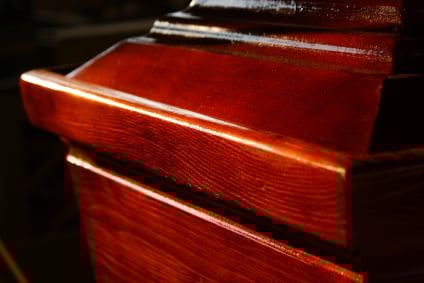 Although funeral planning has included coffins over thousands of years of human history (with ancient Egyptian caskets among the finest), the casket industry as we know it today is a fairly recent development. As is the case with almost all of our modern-day funeral traditions, the practice of using formal, wooden (or metal) caskets purchased from a funeral home for the express purpose of looking good goes back to the Victorian era.
Victorians, as a general rule, took their mourning very seriously. From wearing black (or black armbands) to covering all the mirrors in the house and stopping the clocks, the Victorians filled the process of burying the dead with the kind of pomp and ceremony that we still rely on even today. For this reason, caskets became more and more ornate (and expensive) during this time, as it was considered a sign of respect and wealth to provide a fitting casket for a loved one.
The Modern Casket
While the Victorians were very good at casket technology (in fact, this was the era when a casket with a ringing bell was invented in case of accidental burial), it wasn’t until the 1950s that the modern funeral industry began to really take shape. At this time, less than 20 percent of caskets were made of hardwood, and around 25 percent were metal. The rest were cloth-covered. However, as steel and other metals became more accessible (and cost-effective), they gradually replaced wood and cloth as the casket material of choice.

Today, consumers have quite a bit of variety when it comes to choosing a casket. Metals and hardwoods are definitely among the top options, although there are still a few dozen companies in the United States that make the more traditional cloth-covered caskets. And all caskets—regardless of type—can be purchased through funeral homes, via third-party sellers, online, or even at discount stores. Because the market has so many suppliers, it’s possible to comparison shop and look for features that are important to you.
The Value of Choice
Although caskets continue to be one of the most marked-up items on a funeral checklist, consumers can expect there to be greater options and lower prices as the years progress. This is due in large part to how much more educated today’s buyers are about casket costs and what they can do to save money on funerals.
The rise of cremation also plays a role in changes in the funeral industry. Because cremation offers an affordable alternative to traditional burial, casket makers have to come up with innovative solutions to market their goods. This means you’ll see more things like themed caskets (such a Harley Davidson casket for the motorcycle lover) as well as nontraditional materials like bamboo or other green casket options.
No matter what type of funeral you have planned, the market is full of ways for you to save money, to make your funeral unique, or to stick to traditional methods. Greater choice is greater for everyone involved.
Please share your thoughts on this article
Related articles

How to Choose a Crematory
Most people already know that when they are ready to start funeral planning, they will need to select the funeral home and cemetery that will be handling their loved one’s remains. After all, the funeral home you choose determines who will be r... more »

Should You Pre-Plan Your Funeral through Your Current Insurance Provider?
If you’re getting ready to pre-plan your funeral, you’ll soon discover that there are many different kinds of providers and services out there. These days, you can choose from specialty businesses that only sell funeral pre-package plans, cemeter... more »

Who Should Be in Charge of Funeral Planning: the Funeral Home or a Family Member?
In almost all cases in which you make financial arrangements during the funeral planning stages, it will be necessary to choose a beneficiary or executor. This will be the individual who spends whatever money you have set aside for the funeral and w... more »