
 In a country where free speech reigns and everyone is entitled to his or her opinion, the rights of mourning families regularly come into question. This is never more true than when military funerals or other funerals of high public interest occur. On the one hand, it is important that those who are grieving are able to plan a funeral and say goodbye in a way that is respectful and private. On the other hand, the United States works hard to allow organizations to voice a protest in keeping with their rights as citizens.
New Military Funeral Regulations
In August 2012, President Obama signed the Honoring America’s Veterans and Caring for Camp Lejeune Families Act of 2012 into law. Foremost among the law’s details, there are now restrictions in place to keep protestors at military funerals a discreet distance from the mourning family.
Under this new legislation, any protests (usually held in response to the individual’s private life or as a larger protest against military service) must be held at least 300 feet from military funerals. Likewise, these groups are prohibited from forming two hours before or after a service in order to give the family a wide berth. The law directly counteracts a 2011 Supreme Court ruling that allowed public displays as protected under the First Amendment.
What This Means for Funeral Planning
(more…)
In a country where free speech reigns and everyone is entitled to his or her opinion, the rights of mourning families regularly come into question. This is never more true than when military funerals or other funerals of high public interest occur. On the one hand, it is important that those who are grieving are able to plan a funeral and say goodbye in a way that is respectful and private. On the other hand, the United States works hard to allow organizations to voice a protest in keeping with their rights as citizens.
New Military Funeral Regulations
In August 2012, President Obama signed the Honoring America’s Veterans and Caring for Camp Lejeune Families Act of 2012 into law. Foremost among the law’s details, there are now restrictions in place to keep protestors at military funerals a discreet distance from the mourning family.
Under this new legislation, any protests (usually held in response to the individual’s private life or as a larger protest against military service) must be held at least 300 feet from military funerals. Likewise, these groups are prohibited from forming two hours before or after a service in order to give the family a wide berth. The law directly counteracts a 2011 Supreme Court ruling that allowed public displays as protected under the First Amendment.
What This Means for Funeral Planning
(more…) Funeral Protest Laws
October 18th, 2013In a country where free speech reigns and everyone is entitled to his or her opinion, the rights of mourning families regularly come into question. This is never more true than when military funerals or other funerals of high public interest occur. On the one hand, it is important that those who are grieving are able to plan a funeral and say goodbye in a way that is respectful and private. On the other hand, the United States works hard to allow organizations to voice a protest in keeping with their rights as citizens.
New Military Funeral Regulations
In August 2012, President Obama signed the Honoring America’s Veterans and Caring for Camp Lejeune Families Act of 2012 into law. Foremost among the law’s details, there are now restrictions in place to keep protestors at military funerals a discreet distance from the mourning family.
Under this new legislation, any protests (usually held in response to the individual’s private life or as a larger protest against military service) must be held at least 300 feet from military funerals. Likewise, these groups are prohibited from forming two hours before or after a service in order to give the family a wide berth. The law directly counteracts a 2011 Supreme Court ruling that allowed public displays as protected under the First Amendment.
What This Means for Funeral Planning
(more…) Attending a Masonic Funeral
October 15th, 2013 When it comes to funeral planning, religion and culture aren’t the only determining factors in how a ceremony is conducted. If the deceased was a member of the Freemasonry (the oldest functioning fraternal organization), he may wish to have a traditional Masonic funeral. Although most of the rituals of a Masonic funeral are similar to those you’ll find in any type of memorial service, there may be a few differences you can prepare for.
What it Means to Be a Mason
One of the key factors of being a member of the Freemason organization is the instant brotherhood and kinship that arises. In addition to general support and friendship, this means that members often step forward to provide assistance to others, regardless of how close they are or plan to be in the future. When a member passes away, this may mean that other members will attend the funeral, help cover expenses, or otherwise support the grieving family—even if they never met before.
A Masonic funeral may therefore be more crowded than a regular funeral, as members will attend to show their support of their deceased Brother. In a kind of tribute that echoes those of a policeman, military member, or other service provider, individuals often go above and beyond the call of duty to show how much they care.
(more…)
When it comes to funeral planning, religion and culture aren’t the only determining factors in how a ceremony is conducted. If the deceased was a member of the Freemasonry (the oldest functioning fraternal organization), he may wish to have a traditional Masonic funeral. Although most of the rituals of a Masonic funeral are similar to those you’ll find in any type of memorial service, there may be a few differences you can prepare for.
What it Means to Be a Mason
One of the key factors of being a member of the Freemason organization is the instant brotherhood and kinship that arises. In addition to general support and friendship, this means that members often step forward to provide assistance to others, regardless of how close they are or plan to be in the future. When a member passes away, this may mean that other members will attend the funeral, help cover expenses, or otherwise support the grieving family—even if they never met before.
A Masonic funeral may therefore be more crowded than a regular funeral, as members will attend to show their support of their deceased Brother. In a kind of tribute that echoes those of a policeman, military member, or other service provider, individuals often go above and beyond the call of duty to show how much they care.
(more…) Funeral Fundraising
September 16th, 2013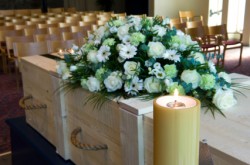 Whenever anyone talks about funeral costs or finding ways to finance a burial, the most commonly cited options include pre-planned funerals, funeral or life insurance, estate money, or even a private savings account. It has long been considered the responsibility of the deceased or the deceased’s immediate family to cover all the funeral costs, regardless of how that affects personal finances.
While there is no denying that funeral costs should be covered by those closest to the deceased, this is not always a possibility. Whether due to personal circumstances, timing, or funeral plans that fell through, you may find yourself in need of additional funds. One such place to turn for help is through funeral fundraising.
What is Funeral Fundraising?
(more…)
Whenever anyone talks about funeral costs or finding ways to finance a burial, the most commonly cited options include pre-planned funerals, funeral or life insurance, estate money, or even a private savings account. It has long been considered the responsibility of the deceased or the deceased’s immediate family to cover all the funeral costs, regardless of how that affects personal finances.
While there is no denying that funeral costs should be covered by those closest to the deceased, this is not always a possibility. Whether due to personal circumstances, timing, or funeral plans that fell through, you may find yourself in need of additional funds. One such place to turn for help is through funeral fundraising.
What is Funeral Fundraising?
(more…) Paying for a Parent’s Funeral
September 13th, 2013 In cases where an individual did not make advance funeral plans, chances are fairly good that a spouse or adult child will be responsible for planning and financing the funeral. Long held as the custom across countries and cultures, the idea that a child must bear the burden of burial is one that many of us recognize. After all, these are the individuals who brought us into the world…it seems only fitting that we send them out of it.
Unfortunately, circumstances and financial hardship often get in the way of these types of plans. In addition to the emotional toll that losing a parent can have on an individual, it can be difficult to know where to find the resources to cover funeral costs as well as what types of decisions to make to best honor your parent.
If a parent’s death has recently occurred, we suggest you sit down with other siblings and your remaining parent to go over your options and to discuss funeral planning details. Depending on what kind of pre-plan funeral arrangements were made and your financial situation, you could rely on any of the following payment types.
In cases where an individual did not make advance funeral plans, chances are fairly good that a spouse or adult child will be responsible for planning and financing the funeral. Long held as the custom across countries and cultures, the idea that a child must bear the burden of burial is one that many of us recognize. After all, these are the individuals who brought us into the world…it seems only fitting that we send them out of it.
Unfortunately, circumstances and financial hardship often get in the way of these types of plans. In addition to the emotional toll that losing a parent can have on an individual, it can be difficult to know where to find the resources to cover funeral costs as well as what types of decisions to make to best honor your parent.
If a parent’s death has recently occurred, we suggest you sit down with other siblings and your remaining parent to go over your options and to discuss funeral planning details. Depending on what kind of pre-plan funeral arrangements were made and your financial situation, you could rely on any of the following payment types.
- Life Insurance: Although not everyone purchases a funeral pre-plan, life insurance is fairly common. The named beneficiary (or beneficiaries) will receive a lump sum payable upon death and may use those monies for the funeral. Because these funds may take a few weeks to be processed, most funeral homes are willing to work with you to arrange the payments at a later date. (more…)
Inexpensive Ways to Dress a Child for a Funeral
September 9th, 2013 Children aren’t always invited to attend funerals, but it is becoming more common to introduce formal death to kids at a young age. Because they are often bombarded by media images and video games that include death, going to a funeral for a relative can be a more realistic and practical way for them to understand what death means.
While many parents are happy to include children at funerals, there remains the lingering question of how to dress them…and how to dress them on a budget. It isn’t practical to purchase a somber black formal outfit they might only wear the one time, but neither is it appropriate to dress them in a glittery holiday dress or jeans and a t-shirt. To dress a child for a funeral for less, we recommend a few key steps.
Children aren’t always invited to attend funerals, but it is becoming more common to introduce formal death to kids at a young age. Because they are often bombarded by media images and video games that include death, going to a funeral for a relative can be a more realistic and practical way for them to understand what death means.
While many parents are happy to include children at funerals, there remains the lingering question of how to dress them…and how to dress them on a budget. It isn’t practical to purchase a somber black formal outfit they might only wear the one time, but neither is it appropriate to dress them in a glittery holiday dress or jeans and a t-shirt. To dress a child for a funeral for less, we recommend a few key steps.
- Go Dark, Not Black: There are no rules that say a child (or anyone) has to wear black to a funeral. Dark colors like blue, grey, green, and even more muted reds can be appropriate. You can even include white as long as there are some darker colors to compliment it.
- Shop for Less: Because this is an outfit your child may only wear one time, consider shopping at thrift stores, discount stores, or clothing swaps. Look for functionality over visual appeal, and don’t worry as much about fit. This is a one-time use.
- Buy Separates: Instead of purchasing an entire outfit, opt for one piece. A shirt, a pair of pants, a serviceable skirt…these can be bought for fairly little and paired with something your child already owns.
- Borrow from Others: Hand-me-downs are a common part of most childhood wardrobes, but few people consider borrowing clothes for a temporary fix. Now is a good time to consider it. If you know of someone who has been through a similar situation—or who has a large kid’s closet the right size—consider approaching them for a favor.
- Dress Up in a General Sense: Because children usually aren’t the focus of a funeral, you may be able to get away with simply dressing them up. Holiday outfits, wedding attire, and other formal kids wear could be an easy solution. Just be sure to stay away from glitter, spangles, vibrant colors, or anything else that will cause them to stand out (this includes shoes, as well).
Funeral Cost Calculator
September 6th, 2013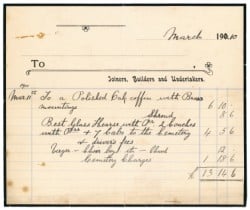 Funeral costs are a real concern for most families facing the death and burial of a loved one. At a time when stress and anxiety are already higher than average, knowing that you will be expected to pay out thousands of dollars to provide a fitting farewell can prove difficult.
While more and more families are preparing for this eventuality with funeral pre-paid packages, there are options for those who have not planned ahead. In addition to financing a funeral, you can manage funeral costs by comparison shopping, selecting lower-cost burial alternatives, and coordinating services at the funeral home of your choice.
Online Funeral Planner Assistance
If you are preparing to plan a funeral, we suggest following this guide to estimate costs and come up with the best options for your family. Losing a loved one will always be difficult—and financing a funeral is rarely something anyone looks forward to—but with the right resources and support, you can come up with a beautiful funeral that won’t break the bank.
(more…)
Funeral costs are a real concern for most families facing the death and burial of a loved one. At a time when stress and anxiety are already higher than average, knowing that you will be expected to pay out thousands of dollars to provide a fitting farewell can prove difficult.
While more and more families are preparing for this eventuality with funeral pre-paid packages, there are options for those who have not planned ahead. In addition to financing a funeral, you can manage funeral costs by comparison shopping, selecting lower-cost burial alternatives, and coordinating services at the funeral home of your choice.
Online Funeral Planner Assistance
If you are preparing to plan a funeral, we suggest following this guide to estimate costs and come up with the best options for your family. Losing a loved one will always be difficult—and financing a funeral is rarely something anyone looks forward to—but with the right resources and support, you can come up with a beautiful funeral that won’t break the bank.
(more…) Planning a Funeral for an Unborn Child
September 3rd, 2013 One of the most difficult things a parent can be asked to do is to plan the funeral or memorial service of a child who has yet to be born. Most experts agree that a formal funeral or service is an important part of the grieving process of giving birth to a child who isn’t meant for this world—and getting started early can help you process some of your emotions in advance.
Most infant funerals in this type of situation occur within a week following your loss. Because you and your family will be undergoing a difficult trial (and possibly recovering from surgery or childbirth), having everything prepared ahead of time can allow you to focus on what really matters during this time.
Plan a Memorial Service Your Way
There is no rule that says you have to hold a traditional funeral for your child, or even that you have to hold one at all. You can call it a memorial service, a commemoration of life, a going home party, or even a birthday celebration. How you set it up is entirely up to you, though you may want to follow a few general guidelines.
One of the most difficult things a parent can be asked to do is to plan the funeral or memorial service of a child who has yet to be born. Most experts agree that a formal funeral or service is an important part of the grieving process of giving birth to a child who isn’t meant for this world—and getting started early can help you process some of your emotions in advance.
Most infant funerals in this type of situation occur within a week following your loss. Because you and your family will be undergoing a difficult trial (and possibly recovering from surgery or childbirth), having everything prepared ahead of time can allow you to focus on what really matters during this time.
Plan a Memorial Service Your Way
There is no rule that says you have to hold a traditional funeral for your child, or even that you have to hold one at all. You can call it a memorial service, a commemoration of life, a going home party, or even a birthday celebration. How you set it up is entirely up to you, though you may want to follow a few general guidelines.
- Contact a Funeral Home You Trust: Funeral homes tend to be familiar with the process of burying a newborn child, and will be able to coordinate services according to your wishes. Look for a home that offers sympathy and a friendly approach, as you’ll be entrusting your child’s legacy to their hands.
- Determine Your Interment Wishes: The decision of whether to bury or cremate a child can be an agonizing one. Bear in mind your religious preferences, your desire for portability (if you will be moving away at a later date and may want to visit the grave), finances, and personal wishes. Both of burial and cremation are viable options and can be accommodated in a way that is caring and appropriate.
- Take Your Time Making Decisions: It can be comforting for many families to choose the details of the burial. A special outfit for your child to wear, a hand-knitted blanket to be wrapped up in, the final casket, a burial location and headstone—even the flowers and special memorial tributes you want at the service. As these are one of the few things you’ll be able to do for your child, it’s okay to take your time and savor the process.
- Set a Date: Because many children in this situation are born via C-section or another planned delivery, you may be able to make advance memorial service plans. By setting a date and confirming location and other services, you allow family members to organize their schedules to join you.
Are There Differences between Male and Female Funeral Directors?
August 29th, 2013 The funeral planning industry has long been considered a male-dominated profession. From the funeral directors who greet you at the door to the behind-the-scenes morticians who prepare your loved one for a final viewing, men have made up the majority of funeral service workers for quite some time.
Historically, caring for the dead has been the responsibility of women. As caretakers of the home (where most body preparation took place during the pre-Victorian eras), women were responsible for washing and dressing the body, and placing it in a shroud. From there, men took over. Building coffins, carrying the body, and the actual burial was men’s work. In fact, burial was considered such a “male” issue that in many cultures, women weren’t even allowed to attend the funerals or participate in the procession.
(more…)
The funeral planning industry has long been considered a male-dominated profession. From the funeral directors who greet you at the door to the behind-the-scenes morticians who prepare your loved one for a final viewing, men have made up the majority of funeral service workers for quite some time.
Historically, caring for the dead has been the responsibility of women. As caretakers of the home (where most body preparation took place during the pre-Victorian eras), women were responsible for washing and dressing the body, and placing it in a shroud. From there, men took over. Building coffins, carrying the body, and the actual burial was men’s work. In fact, burial was considered such a “male” issue that in many cultures, women weren’t even allowed to attend the funerals or participate in the procession.
(more…) Jewish Funeral Planning Customs: Chevra Kadisha
August 23rd, 2013 Jewish funeral customs are some of the most unique and beautiful traditions in the burial industry. With a focus on a strong sense of community and mourning, these customs range from the strict preparation of the body to mourning habits like sitting shiva (a seven-day mourning period observed by the immediate family of the deceased).
In keeping with these religious rites is the chevra kadisha, a holy society (or organization) composed of individuals who oversee the process of preparing the body of the deceased for burial. Central to the concept of chevra kadisha are showing a proper level of respect for the body and ensuring that the ritual cleansing and dressing of the body is in keeping with Jewish standards.
Why Body Preparation is Important
In today’s funeral industry, body preparation tends to be a fairly invasive process. From autopsies and embalming to the thick layers of makeup put on to hold an open casket ceremony, there can be quite a bit of physical manipulation done to what remains of the person you loved.
In the Jewish tradition of chevra kadisha, this aggressive approach is set aside in favor of a more personalized purification rite. Those who are tasked with the body’s preparation are considered to be doing an incredibly good and selfless deed, as their task is one that is done for reasons of kindness.
(more…)
Jewish funeral customs are some of the most unique and beautiful traditions in the burial industry. With a focus on a strong sense of community and mourning, these customs range from the strict preparation of the body to mourning habits like sitting shiva (a seven-day mourning period observed by the immediate family of the deceased).
In keeping with these religious rites is the chevra kadisha, a holy society (or organization) composed of individuals who oversee the process of preparing the body of the deceased for burial. Central to the concept of chevra kadisha are showing a proper level of respect for the body and ensuring that the ritual cleansing and dressing of the body is in keeping with Jewish standards.
Why Body Preparation is Important
In today’s funeral industry, body preparation tends to be a fairly invasive process. From autopsies and embalming to the thick layers of makeup put on to hold an open casket ceremony, there can be quite a bit of physical manipulation done to what remains of the person you loved.
In the Jewish tradition of chevra kadisha, this aggressive approach is set aside in favor of a more personalized purification rite. Those who are tasked with the body’s preparation are considered to be doing an incredibly good and selfless deed, as their task is one that is done for reasons of kindness.
(more…) Bereavement Programs for Kids
August 20th, 2013 In the death care industry, we tend to look only at the first few weeks following the death of a loved one. From figuring out funeral plans to coordinating long-distance relatives flying in for the memorial service, you’ll find plenty of information about the details of putting a loved one to rest.
However, for many families, the real challenge of coping with death occurs in the weeks, months, and even years following. This is especially true for children, who may not have the coping skills necessary to process the death of a close friend, sibling, or parent.
Childhood bereavement programs exist to help children, adolescents, and their families to understand and move forward from death, terminal illnesses, or even long-term separations. Drawing from clinical specialists, psychologists, counselors, and even religious leaders, these programs can provide some much-needed support during a difficult time.
Kids’ Bereavement Program Options
Every bereavement program for kids will vary depending on where it is located and who is funding it. Because this is such a pivotal time in a child’s life, it’s important that you know exactly what the program entails and who will be running it. Most funeral directors can provide you information on hospital- or clinic-based programs in your area, and this is generally considered a good place to start.
(more…)
In the death care industry, we tend to look only at the first few weeks following the death of a loved one. From figuring out funeral plans to coordinating long-distance relatives flying in for the memorial service, you’ll find plenty of information about the details of putting a loved one to rest.
However, for many families, the real challenge of coping with death occurs in the weeks, months, and even years following. This is especially true for children, who may not have the coping skills necessary to process the death of a close friend, sibling, or parent.
Childhood bereavement programs exist to help children, adolescents, and their families to understand and move forward from death, terminal illnesses, or even long-term separations. Drawing from clinical specialists, psychologists, counselors, and even religious leaders, these programs can provide some much-needed support during a difficult time.
Kids’ Bereavement Program Options
Every bereavement program for kids will vary depending on where it is located and who is funding it. Because this is such a pivotal time in a child’s life, it’s important that you know exactly what the program entails and who will be running it. Most funeral directors can provide you information on hospital- or clinic-based programs in your area, and this is generally considered a good place to start.
(more…)